• Skip to main content
  • Skip to primary sidebar

Childrens Cove

The Cape & Islands Child Advocacy Center

  • Building Hope Capital Campaign
  • Get Help
  • Contact Us
  • Home
  • Child Abuse
    • What is Child Abuse?
    • Sexual Exploitation
    • Signs + Symptoms
    • If You Suspect Abuse
  • Parents + Caregivers
    • Have the Conversation
    • How to Protect Your Child
    • Keep Kids Safe ONLINE
    • Resources
    • Parent FAQs
  • Kids + Teens
    • Kids
    • Teens
  • Services
    • Accessing Services
    • Forensic Interview
    • Mental Health
    • Family Advocacy
    • Medical
    • CSEC
  • Community
    • Community News
    • Education
      • Professional Training
      • Community Education
      • Online Education
    • Volunteer
    • Upcoming Events
  • About Us
    • Our Story
    • What Are CACs?
    • Staff + Board
    • Employment + Internships
    • Media
      • Media Room
      • Brand + Campaigns
      • Press Releases
    • Contact Us
    • General FAQs

GET
HELP

QUICK
EXIT

Jacob Stapledon

Community Partners – Big Brothers Big Sisters of Cape Cod & the Islands

February 18, 2022 by Jacob Stapledon

Back to Posts

Community Partners – Big Brothers Big Sisters of Cape Cod & the Islands

Jacob Stapledon

February 22, 2022

The ways in which children grow, learn, and develop are as varied as flowers in bloom. For some, they grow and thrive in any environment and circumstance, regardless of the weather or care. Others need specific conditions to grow, and if not met, will be stunted and underdeveloped. However, all of them when placed in an unnatural or traumatic environment, need specific support and intervention to truly thrive. Nationally, for nearly 120 years, Big Brothers Big Sisters of America have provided supportive mentoring to unlock the potential of children; to provide that additional support for children to thrive.

Here on Cape Cod and the Islands, our friends and community partners, Big Brothers Big Sisters of Cape Cod & the Islands (BBBSCI), work with under-resourced families to provide their children with transformational, one-to-one professionally supported relationships with caring adult mentors, so that their children will thrive. Children’s Cove and BBBSCI share the belief in creating a community where children are free of abuse, their voices are heard, and where they can enjoy healthy, safe, and empowered lives. Our collaborative approach allows Children’s Cove to provide free training for staff and volunteers to recognize early indicators and respond to concerns of abuse. In turn, we provide opportunities for referrals of children we serve for safe and supportive mentors. BBBSCI want youth to achieve their full potential, which contributes to healthier families, better schools, brighter futures, and stronger communities. Through three innovative program models we allow children more opportunities to be paired with a mentor.

The reality is that since March of 2020, boys in need of a mentor have waited nearly twice as long for a Big Brother, and of our 70-child waiting list, 60 of them are boys.”

However, to meet this need, BBBSCI needs volunteer mentors to support children in our community. Beginning on March 1, 2022, they will be launching their “60 Guys in 30 Days” campaign to find safe and supportive mentors for boys across Cape Cod and the Islands. JR Mell, Executive Director of BBBSCI, tells us that “the reality is that since March of 2020, boys in need of a mentor have waited nearly twice as long for a Big Brother, and of our 70-child waiting list, 60 of them are boys.”

To try to shorten this wait list, BBBSCI will be at Bad Martha’s Brewery in East Falmouth on Thursday, February 24, 2022, from 5:30pm-7pm to kick off their campaign. The agency aims to provide a venue for people to join them, learn about the need for mentors, especially male mentors, and formally announce the launch of their campaign.

JR states “this night will be a way for people to come out, meet some of our current Bigs, staff, and get a better understanding of what it means to be a mentor with our program.”

There is no cost or commitment to attend the event. Bad Martha’s has generously donated their space and food for the night. Raffle prizes and a cash bar will be available for those interested. In addition, the venue has both indoor and outdoor heated space available to meet everyone’s COVID comfort levels.

If you are interested in volunteering to become a Big, want to learn more, or understand other ways you can support our community partners please join them at Bad Martha’s on February 24th by registering on Eventbrite here. You can also find our more information on their Facebook Page or by calling 508.827.8170.

Join our mailing list.

Stay up to date with what we’re working on!

Sign Up Now

Filed Under: COMMUNITY

Why You Need to Have the Conversation: Children are No Match for Predators

February 18, 2022 by Jacob Stapledon

Back to Posts

Why You Need to Have the Conversation: Children are No Match for Predators

Jacob Stapledon

February 22, 2022

We would prefer to think that perpetrators of child sexual abuse are easily spotted on the edges of society, people who stand out or seem uncomfortable; people we don’t know. We tell our children to not talk to strangers and remind them that if you don’t know someone in real life or online, not to share any personal information. And while these lessons are important to teach, the truth is that perpetrators of child sexual abuse are rarely the man with the van in the trench coat. In fact, they look “normal.” Studies show that 90% of victims know their abusers – they are family, close friends, teachers, daycare staff, coaches, and members of the faith community. Simply put, abusers are most often those we trust our children with on a daily basis.

Four years ago, Larry Nasser made headlines. He was a nationally known doctor for the United States women’s Olympic gymnastics team, while at the same time a serial child rapist who used his position of power and trust to sexually abuse and assault hundreds of girls and young women. Through social media and the news, millions of Americans heard from dozens of his victims and the trauma it made in their lives. Last year we discussed the more than 92,000 sexual abuse claims made against the Boy Scouts of America, and the Diocese of Fall River of the Catholic Church releasing the names and assignments of 75 clergy members accused of child sexual abuse going back 70 years. We’ve seen in recent years the harm caused by allegations of sexual abuse and inappropriate conduct of teachers in our own community.

On February 10, 2022, a child psychologist in Danvers, Massachusetts was arrested after a contractor stumbled upon a secret space in the building he resided where he allegedly kept hundreds of images of child sexual abuse material. As a part of the initial investigation, there appears to be considerable evidence of his involvement in the ownership of the material. While the presumption of innocence exists until someone is proven guilty, it is so disturbing that a child psychologist would own child pornography.

It is not the outcasts of society who are abusing children, it is those with the most trust, power, status, or celebrity.

What all these cases highlight is that it is those with the most trust, power, status, or celebrity who abuse children. Perpetrators groom not only children, but the environment, parents and caregivers, neighbors, and coworkers around them. The manipulation of the predator is often why, after an initial accusation, many will respond with disbelief, and shock, even fight to defend the abuser because, if true, the deception is incredibly hurtful and horrific.

Perpetrators of abuse are cunning, smart, patient, and watch carefully and quietly; they look for vulnerable children. Vulnerability is more than just age, size, and gender identity; it’s looking to see if a child’s parents are always working, is the child getting enough attention, does a child have a disability, feel like an outcast, or do they have overly trusting parents? These are examples of what predators look for and what they consider an easy opportunity.

In recorded interviews,  perpetrators of abuse discussed very openly with Oprah Winfrey how they gained trust and took advantage of children (this video is very detailed, and disturbing, please be advised). Individuals who abuse children think differently than those who don’t. Very often, they do not believe what they are doing is wrong to the child, but that it is simply shunned by society. Corey Jewell Jensen, M.S, who has worked with sex offenders for more than 35 years, details the way in which perpetrators of abuse groom the environment, parents and children of those victimized and justify their behavior.

Unfortunately, when faced with the reality of the cunning grooming practices of predators, we need to acknowledge that young children are no match for those who seek to sexually abuse a child. This is why at Children’s Cove, we often advocate that parents “Have the Conversation.” There’s no perfect time or age to speak with your children about body safety. Instead, it should be part of regular, ongoing conversation from a child’s early years through their teens.

We talk with our children about so many important safety topics, including fire, water, street, and car safety. Let body safety be another topic you introduce. To learn more about how to have the conversation about body safety visit our page here.

Join our mailing list.

Stay up to date with what we’re working on!

Sign Up Now

Filed Under: OUR TAKE

Child Trafficking Remains an Issue in Southeastern Massachusetts

January 21, 2022 by Jacob Stapledon

Back to Posts

Child Trafficking Remains an Issue in Southeastern Massachusetts – 10 more points we need you to know

Jacob Stapledon

January 20, 2022

This article, it’s data and information included was written with input and information provided by team members from Children’s Cove, the Bristol County Children’s Advocacy Center, and the Plymouth County Children’s Advocacy Center.

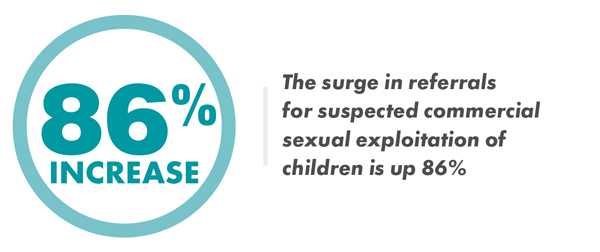
In 2021, the Children’s Advocacy Centers for Cape Cod & the Islands, Bristol County and Plymouth County held response meetings and coordinated support services to nearly 300 child victims of human trafficking. In nearly 90% of these cases there was an online element related to the exploitation, meaning, the exploitation took place online OR there was specific communication, planning or exchange which took place online. Children in our communities, including Hyannis, Westport, Fall River, Hingham, Brockton, Mashpee, Plymouth, and Dartmouth, were identified as victims of sexual exploitation and human trafficking. Each of these Child Advocacy Centers (CACs) in southeastern Massachusetts work collaboratively with every branch of law enforcement and child protective services to provide a coordinated response to child trafficking. With an increasing risk to children in online spaces, we want to inform the community of the trends we have seen over the last year. This article aims to demystify the terms and issues, where these risks unfold, and what parents and caregivers in the community can do to reduce the risk of exploitation online.

1. The Definition of Commercial Sexual Exploitation of Children (CSEC)

Human trafficking is widely defined as “a crime that involves exploiting a person for labor, services, or commercial sex.” Massachusetts state law further defines the trafficking of children as the Commercial Sexual Exploitation of Children (CSEC). The CACs of Massachusetts recognize that CSEC occurs when a person under the age of 18 engages, agrees to engage, or offers to engage in sexual conduct with another person in return for a fee or an exchange of food, shelter, clothing, education, or care. Child sexual abuse material (child pornography) can also be considered a form of trafficking.

2. Online Exploitation is More than Just a Photo

Often, when people hear the term online exploitation, they may think it is solely referring to the sending or receiving of nude images of individuals under 18. Correctly, yes, that is a form of online exploitation where a child’s image can then be captured and sold, traded, or shared indefinitely on the internet. However, Child Sexual Abuse Material can be far more than that. Once a child has discovered the person has saved the image, they may be manipulated, threatened or exploited to produce more (often increasingly graphic) images or ultimately meet in person where they become physically exploited. The person receiving the image may be receiving some type of financial gain from their exploitation, or use it to trade with other exploiters. The shame, embarrassment and fear children feel upon learning the person they are engaging with online is not the person they claimed to be reduces the instances where they will ask for help from a trusted adult. What can start as one single image can quickly spiral out of control to a place they never would have found themselves otherwise.

3. Exchange is Something of Value to the Child, Not Everyone

So often parents and professionals alike only think of an exchange being money. Money is the least often exchanged item of value for children who are victimized. And, as a reminder, an exchange does not need to take place, only be offered. Digital assets and currencies in video games and mobile apps as well as substances not regularly available to children (such as nicotine products including vapes) have rapidly increased as items of value in our region. At times, something more personal is what is desired or valued; someone being their boyfriend or girlfriend, going to a party together they would never be invited to otherwise, etc. The feeling of being wanted, socially accepted, and loved is often the “exchange” or tool exploiters use most.

Post-Graphics-86perc-Surge-600x252
4. No Type of Access is “Safe”

If a child has access to an internet connection, they are at risk of exploitation. Across our region we have seen exploitation take place on parents’ computers, tablets and phones, as well as their own tablets, computers and phones. We also have seen exploitation take place on video game consoles, on school-based Chromebooks, tablets, and iPads and through apps associated with school use. Often, the fear or anxiety associated with risks for exploitation are when a child receives their own mobile phone. If parents and caregivers don’t keep their eyes on these devices and have regular conversations about safety on all internet enabled devices the opportunity for exploitation to happen in plain sight remains high.

5. The Top Culprits in the Digital World

Children can access nearly an unlimited number of apps, social media profiles, email accounts, and online exchanges such as CashApp, PayPal, and Venmo. These apps keep the evidence of exploitation hidden behind a mobile or internet-based device. If parents aren’t involved and regularly monitoring their children’s apps and internet enabled devices, this may be happening right in the same room. Staying up to date with what is trending in the digital world is as important for caregivers as it is for the youth who use them.

Over the last year the most prominent apps where exploitation has taken place, or has been discussed or coordinated were Snapchat, Discord, Facebook Messenger, Instagram, Chat Roulette, WhatsApp and Omegle. For parents and caregivers, understanding how these apps work, discussing safety rules online for these apps, and having your children show you how they use and access them is a good place to start. For resources about apps, how they are used, check out the parent resources on the Internet Matters website.

6. Apps on the Rise and Not Thought About

While the apps listed above have been a focus of issues and investigations over the last year, we are increasingly seeing more issues in newer apps. With TikTok being the most searched and rapidly growing social media and video sharing network since 2020, it has attracted everyone to its platform young and old alike. Children as young as 9 and 10 years old have found themselves in dangerous situation on the platform and as it has become more commonplace, parents and caregivers may have gotten more relaxed about safety associated with this app. This has also translated to video livestreaming apps and platforms like Facetime, Zoom, Skype, or messenger apps which allow livestreaming. Kids and teens may begin a streaming call with the belief that because it is happening in real time it cannot be captured or recorded, when in fact screen shots, sharing and recording is easier now more than ever. And, due to the nature of the streaming, there would be no record on behalf of the streaming service of what took place if it was recorded by a third-party app. Even apps designed specifically for kids and teens with safety in mind, such as Yubo, are targets for online predators and exploiters to infiltrate for the very fact it is supposed to be safe.

7. Exploitation is Normalized and Often Missed

“Sexting,” or sending sexually explicit text messages and images, has become a social norm for kids and teens. With the virtual world regularly intertwined in the real world, dating and sexual exploration regularly resides in online spaces. Sending a nude image to someone a child is interested in is as common as passing a note was pre-cell phone days. However, because of the commonality of it, the desensitization and normalization of one’s nude image is devalued. What was once a horrifying and embarrassing event of a sexual photograph or nude being sent to a group of people is now a common occurrence to little or no alarm. At times these images live right in the group chat of your child’s main friend group on their phone, the place you would never suspect would be an issue.

You must have the difficult conversations about online exploitation with your children and start when they are young.”

8. Prevention is Possible

When reading this list or learning about online exploitation, the first reaction for parents and caregivers is often “well, they just won’t have a phone or a computer, that’s it.” That is as realistic as saying a teen can’t have a car because some people drive recklessly, can’t play sports because of injuries, or go to parties because some people drink. The online and digital world is where most children learn, socialize, and engage. The same conversations about safety which are used for driving, sports and parties need to take place about being online. As a parent, you can have conversations with your children about body and online safety. You can set ground rules for internet usage and access. You can have the difficult conversations about online exploitation with your children and start when they are young. The more engaged you are with a child’s online life and the reality and risks; the more likely they will be to talk with you about issues they have.

9. Leave the Door Open

Even if you do have these conversations with your children, there is always the lingering fear from kids and teens if they mess up and tell you they will get in trouble. We know kids and teens will mess up, and we most definitely would like to take their phones and encase them in concrete and send them to the bottom of the ocean. However, what’s most important is that they know that your door is open for a calm, non-judgmental conversation so that if they do make a mistake, they can ask for help. If they do make a mistake or make a report that something happened to them: believe them, advocate for them, and focus on their health, wellness and safety with support from your local CAC.

Post-Graphics-IU2U-600x252
10. If Your Child is Exploited Online

Remain calm, and don’t take quick action such as deleting images or messages; these may be important to effectively report and get help. Identify how, when and where this happened, where the images are now and who may have them (do not view them), and what app or platform (messenger, Snapchat, Kik, etc.) it was on? Contact your local police department, and you can reach out to your local Children’s Advocacy Center and ask what steps to take next. The National Center for Missing Children (NCMEC) has an incredible resource for parents to walk through how to have content removed from all major platforms in a streamlined process. If you see or suspect child sexual abuse material online or on social media, you can report it to NCMEC through their Cyber Tipline. You don’t need to know who an exploiter is; he or she can be unknown to you – what’s important is that you make the report.

If you have concerns that a child is being exploited, please report suspicious behaviors to your local CAC, law enforcement agency or file a report with the Department of Children and Families. All of these cases are screened and reviewed with a focus on safety in our community. If you are unsure of where to seek support, or what next steps to take, visit our Get Help page for more information.

Join our mailing list.

Stay up to date with what we’re working on!

Sign Up Now

Filed Under: OUR TAKE

Welcome to the Team

January 21, 2022 by Jacob Stapledon

Back to Posts

Welcome to the Team

Jacob Stapledon

January 20, 2022

The team at Children’s Cove was joined last month by a new member to support the mission of the organization. Over the last several years, Children’s Cove has seen a steady increase of referrals from our multidisciplinary partners across Cape Cod, Nantucket, and Martha’s Vineyard. To meet this rising need, Children’s Cove have hired Lauren Journet as a Forensic Interviewer. Lauren has joined the Victims Services team and will working directly with child victims and their non-offending caregivers to support their healthiest outcome.

Lauren Journet, LSWA • Forensic Interviewer

Lauren grew up on Cape Cod and has focused her studies and career in the human services field. Lauren is passionate about being an advocate for children and working towards creating a safe and stable community environment for children to learn and grow. Lauren joins us after previously working at the Department of Children and Families in Plymouth.

As a Forensic Interviewer, Lauren will be leading one of the critical roles at Children’s Cove. The forensic interview is a multidisciplinary team approach to taking a child’s statement following a disclosure of abuse. The interview is a neutral, non-leading, developmentally sensitive, fact-finding process to maximize the amount of information needed for an investigation but done in a way which minimizes the trauma to the child.

Lauren will be receiving her specialized training to become a forensic interviewer in the next month and is meeting and engaging with MDT members and participating in current cases as an observer until that time.

Welcome to the team!

Join our mailing list.

Stay up to date with what we’re working on!

Sign Up Now

Filed Under: COMMUNITY

Mindfulness and Compassion for the Holidays

December 17, 2021 by Jacob Stapledon

Back to Posts

Mindfulness and Compassion for the Holidays

Jacob Stapledon and Manny Marrero, MOT, OTR/L

December 21, 2021

The holiday season is in full swing with colder weather, glowing lights, candles burning, music playing and treats finding their ways into homes, offices, and shared spaces. Holiday cards are exchanged, gatherings organized, elves sit on shelves, and eggnog is found in grocery stores once again.

The winter holiday season is a glowing beacon of hope and togetherness amongst family, friends, and the community. However, it can also be an intrusive reminder of desperation, loss, and feeling isolated, especially for those who have experienced trauma. And, due to the nature of trauma, the impacts are very rarely isolated to a single person. The ripple effect extends outward to parents, caregivers, siblings, neighbors, co-workers and more. Whether it is a recent trauma, or one from long ago, the effects are different for everyone.

Perhaps the holidays bring a reminder of a loved one lost, the unspoken absence of an abuser at the dinner table, or memory of a trauma experienced on the day itself. While everyone else is singing carols or toasting the season, the feeling of being “different” can often compound, creating a heightened sense of isolation or worse.

While everyone else is singing carols or toasting the season, the feeling of being ‘different’ can often compound, creating a heightened sense of isolation or worse.”

So, what to do?

We asked Manny Marrero, a mental health occupational therapist, yoga, mindfulness, and mediation instructor who works at Cape Cod Hospital in the Centers for Behavioral Health, to give us insight on how to manage the consequences of trauma during the holidays. Here’s Manny’s guidance:

The holidays are a microcosm of the complexity and beauty of life. We can be around our loved ones feeling joy and celebrating, and in that same space, we can start to feel grief and suffering. We may get an urge to push the unpleasant emotions away because, after all, “it’s the most wonderful time of the year.” By practicing mindfulness, we can be reminded to be in the moment with a sense of awareness, compassion, and kindness; we can allow those feelings to exist and notice that they will pass naturally. We will feel something else, maybe next time, it is joy, peace, gratitude, or love.

As humans, we are designed to experience a wide range of emotions. An unpleasant emotion does not need to be fixed. Instead, we can meet the unpleasant emotion or memory with understanding and compassion, which sends a message to our mind and body that we are resilient. Mindfulness is not a destination or a panacea. Mindfulness is about being fully present with the moment to enjoy it. Above all, it opens us up to self-compassion when an unpleasant emotion regarding a past traumatic experience comes to the surface. Through mindfulness, we allow ourselves to be human, perfectly imperfect, flawed and enough.

The holidays do not have to be a time of pressure, but rather a time to reflect and share love, kindness, and compassion with others. So, if you find yourself stressed or anxious this holiday season, take five minutes to sit comfortably, let go of expectations and judgments as you breathe deeply into the belly. When you exhale, breathe out slowly with awareness of releasing tension and stress. After five minutes, notice how you feel. You may see there is less stress in the mind and body, and you are better able to be present for yourself and others. When we are present, we truly experience being alive and feeling all the love and joy that the holiday season can bring.

It is also important to practice self-care during this season. Parents, caregivers, and partners often take on the frustration, anger, sadness, and disappointment of their loved ones feeling of loss, trauma, and grief. To support children and loved ones in the holiday season, you must make self-care a priority.

Carve out time for yourself, identify what is going to make you happy and help you relax. Do not put this off! Self-care practices are often the first to go after what can be even a minor inconvenience. Identify at least one healthy activity that calms you down, releases anxiety or frustration, and do your best to practice it daily. Double doses of self-care are recommended. Talk with your partner, family, or friends about what you look forward to in the holiday season and find something you know will bring you joy.

Care for yourself, for your loved ones, and for others. It was the compassion of Cindy Lou Who which made the Grinch stop, reflect, and realize that he was feeling something other than anger. And that made all the difference.

Happy Holidays from all of us at Children’s Cove

For additional tips, lessons, guided meditations, and mindfulness exercises, visit Manny’s YouTube channel here.

Join our mailing list.

Stay up to date with what we’re working on!

Sign Up Now

Filed Under: OUR TAKE

Community Partners – Calmer Choice

December 17, 2021 by Jacob Stapledon

Back to Posts

Community Partners – Calmer Choice

Jacob Stapledon

December 21, 2021

At Children’s Cove, our team members work to support children and families through incredibly difficult situations. For those familiar with our work, and understanding the impacts of child sexual abuse, a frequent question our team members receive is “how do you do it?” There is an unspoken acknowledgement that for those in the professions such as law enforcement, firefighters, paramedics, nurses, doctors and CNAs, mental health professionals and child advocacy center staff pay a toll for their roles in providing that service. Either witnessing the physical impact of trauma, or experiencing it second hand, the vicarious trauma and secondary traumatic stress is incredibly high.

For many, acknowledging this impact can be seen as a weakness. Either due the culture of the organization / field, or the personal implications of stating “I am having a hard time with this.” However, at Children’s Cove, we address secondary traumatic stress, burnout, and self-care right in the interview process. And the conversation is continued throughout the tenure of our team member at Children’s Cove. Addressing vicarious trauma effectively is incorporated in our requirements for national accreditation.

For the last few years, we incorporated several practices in the organization to address these issues as a part of our cases and include our multi-disciplinary partners as much as we can. However, over the last year we have looked for new ways to incorporate skills and self-care as we onboarded new staff members and look to the future. It was exciting for us to connect with Calmer Choice, which has started running programs with other child advocacy centers in the state, and with first responder agencies in our area.

Developing a mindfulness practice can have numerous benefits in everyday life.”

Founded in 2010 Calmer Choice is an innovative, one-of-a-kind non-profit organization that has operated in twenty-eight schools and more than a dozen community-based organizations across Cape Cod. Calmer Choice has become a thought leader in the practice of secular mindfulness in education and is increasingly viewed as a catalyst for creating positive change in schools. The framework that guides Calmer Choice programming is grounded in current academic and scientific research on the benefits of social emotional learning, coupled with mindful awareness training for cognitive, emotional, physical, and social well-being and health.

Calmer Choice has partnered with researchers from Tufts, Yale, MIT, and Harvard to study the impact of its program with over 2,000 students. Evaluations support the effectiveness of the program, as well as demonstrate the feasibility, efficacy, and applicability of teaching these skills in public schools. Their incredible program has impacted more than 38,500+ children in eight school districts, reaching approximately 20% of all students and families living on Cape Cod.

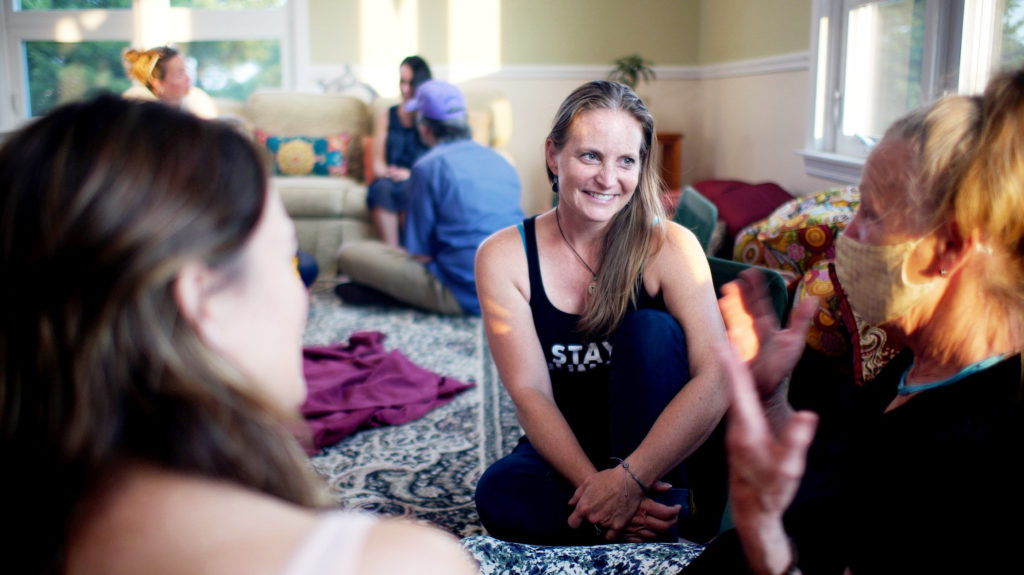
Stephanie Goley, Director of Program Services, having a mindfulness meet up with Calmer Choice instructors.

Beginning in January, Children’s Cove team members will begin an eight-week course with facilitators from Calmer Choice to develop a personal mindfulness practice. These skills can have numerous benefits in everyday life, such as reducing anxiety and stress, and increasing stress management supporting healthy relationships, increasing positivity and empathy, improving immune system function, focus, attention and enhancing resilience. These skills will be incorporated into our team response and debriefing of cases and to maintain the overall wellness of the organization. We are looking forward to this course, and the continued partnership with Calmer Choice on Cape Cod.

If you would like to increase your own mindfulness practices, or to learn more about the programs offered by Calmer Choice, they have a YouTube channel with guided mindfulness exercises with playlists for children (and adults.)

Join our mailing list.

Stay up to date with what we’re working on!

Sign Up Now

Filed Under: COMMUNITY

  • « Go to Previous Page
  • Page 1
  • Interim pages omitted …
  • Page 10
  • Page 11
  • Page 12
  • Page 13
  • Page 14
  • Interim pages omitted …
  • Page 16
  • Go to Next Page »

Primary Sidebar

Children's Cove is a proud
department of Barnstable County.

Our Partners

Children's Cove - The Cape and Islands Child Advocacy Center ©2025. All Rights Reserved.
Individuals pictured are models and are used for illustrative purposes only. Children’s Cove is partially supported by the Massachusetts Office of Victims of Assistance through a Victim of Crime Act of 1984 (VOCA) grant from the Office of Victims of Crime, Office of Justice Programs, U.S. Department of Justice. In accordance with Federal law and U.S. Department of Agriculture policy, this institution is prohibited from discriminating on the basis of race, color, national origin, religion, gender or gender identity, disability, ancestry, age, marital status, public assistance status, sexual orientation, veteran history/military status or genetic information. (Not all prohibited bases apply to all programs.) To file a complaint of discrimination, write to USDA, Director, Office of Civil Rights, 1400 Independence Avenue, S.W., Washington, D.C. 20250-9410, or call (800) 795-3272 (voice) or (202) 720-6382 (TDD). USDA is an equal opportunity provider employer, and lender.

Privacy Policy
Terms of Use
Contact Us
Social Media Policy
Disclosure Notice
Volunteer
Communication Policy
Google Translate Disclaimer
ADA Grievance Procedure
ADA Reasonable Accommodation Policy

Copyright © 2026 · childrenscove child theme on Genesis Framework · WordPress · Log in